
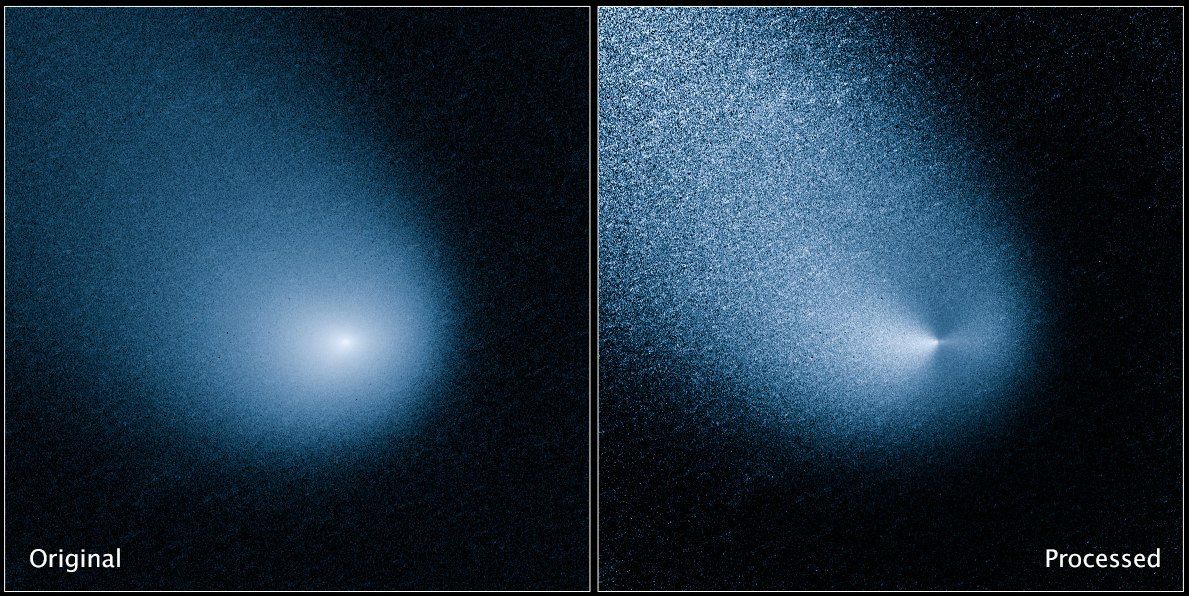
Chemical measurements of interstellar comet 3I/ATLAS suggest it may have formed in a very old and cold environment, according to Webb findings released on 22 June. Researchers analysed infrared observations made in December 2025, using the comet's molecular signatures to investigate conditions beyond our solar system.
The study found a high abundance of deuterium and unusual carbon isotope ratios. Those clues are consistent with an origin perhaps 10 to 12 billion years ago, but the age remains an interpretation of the chemistry rather than a direct clock measurement. As the third confirmed interstellar comet, 3I/ATLAS provides a rare sample of material from another planetary environment. Its composition can help test models of how such objects form and travel between stars.